 Hot Air Balloon Marrakech
What to Wear for a Hot Air Balloon Ride in Marrakech
What to wear for a hot air balloon ride in Marrakech comes down to one thing: you will be standing in an open basket before dawn, when the city is at its coldest, and you will be back in the sun two hours later. The average overnight low in January is 5.9°C while the daytime high reaches 19.2°C, and the gap is even wider in summer. This guide covers the layers, the shoes, the hat, the bag, and the hour-by-hour shape of the morning, from the riad pickup to the flight certificate. It is written from the listings and operator pages compared on our Marrakech balloon comparison, so every time and temperature here comes from a source you can check.
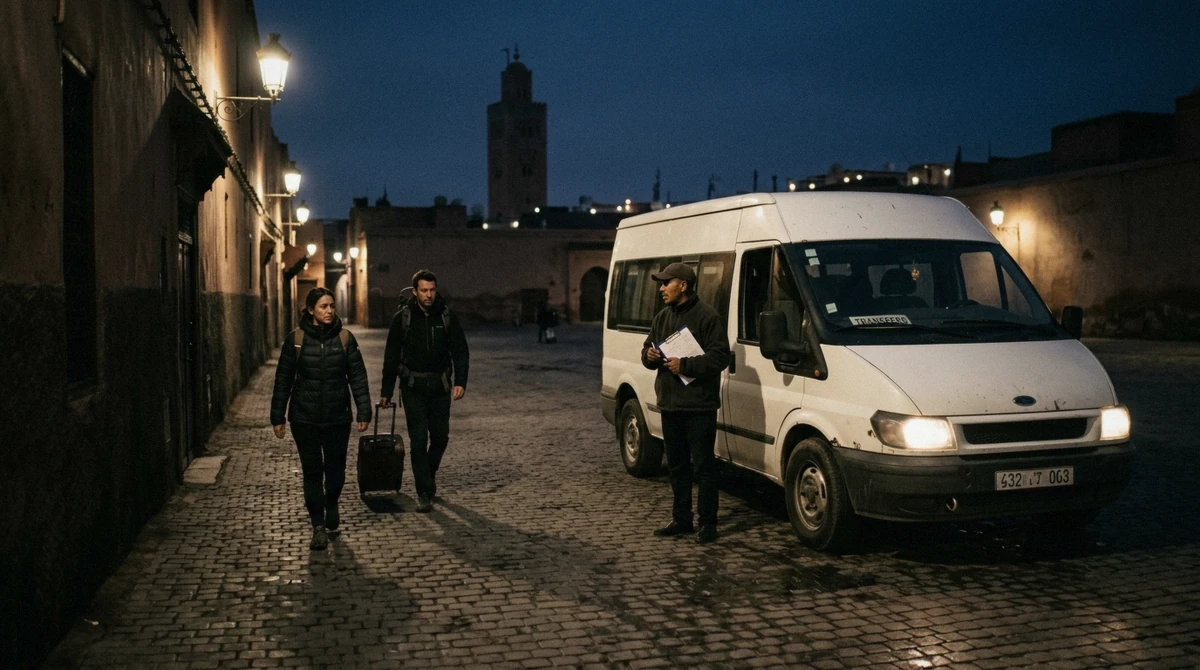
Cars cannot reach most riads inside the Medina, so pickups often meet at the nearest square or gate.
Quick answer What to wear, in short
Wear closed flat shoes, long trousers and two or three layers you can shed, because you board the balloon before sunrise and land in warm sun. Bring a hat with a chin strap or a cap, sunglasses, and a small bag only, since basket space is tight and the crew will ask you to keep belongings secured. Avoid heels, slippers and flip-flops, and skip loose scarves that can blow into the burner area. Dress for the coldest hour of the day, then peel layers off as the sun climbs.
Key takeaways
- See the layer guide and temperature table for what each month needs.
- The hour-by-hour morning itinerary shows when you are cold and when you are not.
- Compare the flights themselves in the Marrakech balloon comparison before you book.
- Winter flying is a different dress problem. Check when to fly over Marrakech.
Dress by Temperature, Not by Season
You are not dressing for Marrakech in general. You are dressing for a launch field in the hour before sunrise, which is close to the coldest moment of the day, followed by a landing in full sun.
The cold-dawn problem
Marrakech balloon flights leave at dawn. Operator widgets sell slots at 5:00 AM, 6:00 AM and 7:00 AM, and the pickup comes before the slot, 30 to 60 minutes earlier on one listing that states it. That puts you on a launch field outside the city in the dark.
In December and January the average overnight low sits at 7.4°C and 5.9°C, and the launch areas around the Palmeraie and the Jbilet hills sit in open ground where the pre-dawn chill feels sharper than the average suggests. Once the sun is up, the swing is brutal. January's average daytime high is 19.2°C and May's is 29.5°C. A balloon flight spans both ends of that range inside about three hours.
The layer system
Dress in three layers and plan to shed two. Start with a base layer, add a fleece or sweatshirt, and top with a windproof jacket, because you fly at 40 to 60 minutes aloft over open country where the air moves with the balloon and not against it. The basket is open to the sky, and flights run from tree level up to roughly 2,500 feet (750 m) above ground, so it is cooler up there than on the ground.
Long trousers are the right call in every month. Shorts leave your legs exposed to the cold at take-off and to the sun above the field.
Temperature table by month
This table sets the average overnight low against the average daytime high in Marrakech for each month, using the Climates to Travel climate data, so you can judge how many layers your flight morning needs. The low is roughly what you feel at pickup, and the high is roughly what you feel back at your hotel after breakfast.
| Month | Average low at dawn | Average daytime high | Layers to start with |
|---|---|---|---|
| January | 5.9°C | 19.2°C | Three, including a windproof jacket |
| February | 7.7°C | 20.8°C | Three, including a windproof jacket |
| March | 10.4°C | 23.7°C | Two to three |
| April | 12.4°C | 25.8°C | Two |
| May | 15.1°C | 29.5°C | Two, light jacket over a top |
| June | 18.0°C | 33.7°C | Two, light |
| July | 20.6°C | 37.7°C | One plus a light cover-up at take-off |
| August | 21.0°C | 37.4°C | One plus a light cover-up at take-off |
| September | 18.1°C | 32.4°C | Two, light |
| October | 15.3°C | 28.4°C | Two |
| November | 10.5°C | 23.3°C | Two to three |
| December | 7.4°C | 20.2°C | Three, including a windproof jacket |
Is it cold in the balloon itself?
Only in the winter months, and only until the sun clears the hills. You climb from an open field at roughly the day's low, and the balloon drifts with the wind, so there is no wind chill from forward motion the way there is in a plane doorway or on a motorbike. Summer flights start mild at around 18°C to 21°C at dawn and warm up fast.
What catches first-timers out is not the flight, it is the standing around: you arrive at the field while the crew inflates the balloon, and most listings serve tea, coffee and pastries during that wait, which is your first chance to warm your hands. For month-by-month sunrise and pickup times, see the best time to fly guide.
Sources: Climates to Travel, Marrakech climate, Hot Air Balloon Marrakech FAQ
Footwear, Hat and What the Listings Ban
You will stand for the whole flight, on rough ground at the launch field and on a wicker floor in the basket, and landings often include a bump or a drag.
Shoes
Closed, flat shoes with a grip sole are the safe answer: trainers or hiking shoes. The launch fields around the Palmeraie, the Jbilet hills and the Oued Tensift valley are dirt and scrub, not tarmac, and dawn dew or irrigation makes them slick. Heels sink and catch in the basket weave.
Slippers and flip-flops offer no protection on landing, when the basket can tip or drag before the crew secures the envelope. Wear socks. Your ankles are also a landing point, so long trousers tucked or worn over the shoe keeps dirt out.
Hat and head
The burner sits above your head and radiates serious heat in pulses. A hat protects you from it and from the sun. Pick a cap or a brimmed hat that fits firmly, because you are 2,500 feet (750 m) or less above open ground and it is breezy up top.
Bring sunglasses in every month. The sunrise you are flying for is directly in your line of sight for much of the flight, and the light over the desert plains is strong even in winter. Skip the loose scarf and the long flowing jewellery.
Anything that can lift in a burner pulse or catch on the basket edge is a liability, and the crew briefing covers this, but it is easier to leave it at the hotel.
Sunscreen and skin
You are outside for three to five hours total, most listings quote the full morning at 3 to 5 hours even though the flight itself is 40 to 60 minutes, and a good slice of that is standing in the open. Put sunscreen on before the pickup even on a winter morning. Lips burn too, so a lip balm with protection earns its space in your pocket.
Before You Book, From Someone Who Went
A traveller lists what she wished she had known about the early start, the cold and the booking. Third-party video embedded from YouTube. We did not film it.
What to Bring and What to Leave Behind
Basket space is limited and the crew wants hands free for the brace position on landing. Small is the rule.
What fits in the basket
A small crossbody bag or a jacket pocket holds what you need: phone, sunglasses, sunscreen stick, lip balm, a little cash and your ID. One listing, Marrakech By Air's, notes a valid ID may be requested at check-in, and its listings set a minimum age of 3, so travelling parents should carry documents for children too. Two listings name bottled water in their inclusions and most serve tea and coffee before the flight, so a bottle is optional.
Cameras and phones
Every flight is a camera opportunity, and phones come up in every basket. No listing checked publishes a formal camera ban, so you can plan on shooting, with two cautions. Keep the strap on and the phone gripped when the burner fires, because a drop from the basket is gone.
And hold the phone clear of the envelope fabric above you, which the burner heats. If you want proper footage without managing a camera, some operators sell it as a product: one Marrakech By Air listing mounts an Insta360 camera on the balloon and sends the edited video by WhatsApp 24 to 48 hours after the flight, and one traveller on a video listing reported paying 200 dirhams on-site for optional drone footage, an add-on beyond the booked package.
What to leave at the hotel
Leave backpacks, hard cases, drones and anything dangling. Drones are a category to treat with care in any case: Morocco's own operating conditions for licensed balloon companies include a ban on commercial aerial photography during flights, so drone work around balloons is not a traveller improvisation. Large bags also complicate the pickup leg of the morning, because many riads sit on streets a car cannot enter and you carry what you bring.
Valuables you do not need stay in your room safe.
The Morning Hour by Hour
Knowing the shape of the morning tells you what your clothes need to do. This is the typical structure across the listings compared here, with times taken from the operator itineraries.
-
Riad pickup in the dark
Pickup for the 5:00 AM slot, the one with the best sunrise odds, lands in the coldest hour. Wear every layer you brought. If your riad is inside the Medina, the van cannot reach the door on most streets. Operators such as BallOOning Marrakech state pickup is then arranged at the nearest vehicle-accessible point, a short walk away, so wear the shoes you will fly in for that walk and keep your bag small enough to carry hands-free.
-
Transfer to the launch field
Ciel d'Afrique's itinerary quotes a 45-minute coach transfer and BallOOning Marrakech a 50-minute van ride to the launch site north of the city. You sit in a warm vehicle, so this is the moment to loosen a layer or visit the bottle before the field, where there may be no facilities. The exact pickup time is sent the day before, one operator by WhatsApp or email, so do not fix your outfit around a time printed on a booking page.
-
Tea, pastries and the briefing
Most listings serve tea, coffee and pastries or croissants while the crew inflates the balloon. AtlasMontgolfière serves its Berber breakfast in a kasbah before the flight instead. Stand near the burners if you are cold, and use this window to remove a layer before boarding, because you will not shed it mid-flight. The pilot gives a short safety briefing covering the brace position: back against the basket side, knees bent, hands gripping the handles until the basket is still.
-
The flight
Flights run 40 to 60 minutes, drifting 4 to 20 km over the Palmeraie, the Jbilet hills, Berber villages and the Oued Tensift valley, from tree level up to about 2,500 feet (750 m). It is coldest in the first ten minutes and warms steadily as the sun climbs. Gloves earn their keep here in winter, when the padded basket rim is cold under your hands.
-
Landing, breakfast, certificate
Landings range from a soft touch to a bump that tips the basket onto its side, which is what the brace position is for, so closed shoes and long trousers matter most in the last two minutes of the day. After landing, the full Moroccan breakfast is served under a caïdal or Berber tent: msemen pancakes, khobz bread, boiled eggs, olives, honey, amlou and mint tea on the listings that name dishes. Your flight certificate is included on every listing checked, several personalised with your name in Arabic calligraphy and collected at an on-site aeroboutique. This is also the natural moment for tipping the crew, and no operator states a suggested amount, so it is at your discretion.
-
Back to Marrakech
The return transfer runs 45 to 50 minutes on the quoted itineraries, putting you back between roughly 4 and 5 hours after pickup. By now the sun is high and you are carrying the two layers you shed, so the small bag or the jacket tied at the waist, decided hours earlier, pays off.
First-Timer Notes That Affect What You Wear
A few practical facts from the listings change how you should plan your morning clothing and bag.
Pickup times move, and clocks changed
The exact pickup time is confirmed the day before, and one operator's listing warns plainly that the time shown on the booking platform is not the real one. On top of that, Morocco moved to permanent GMT, setting clocks back one hour on 20 September 2026, so pickup times quoted in older blogs and reviews are an hour off against the current clock. Pack a small torch or keep your phone charged for the dark walk to the pickup point.
Cancellations mean a second chance to dress right
Flights depend on wind, and one operator states it does not fly in wind consistently above 15 km/h, nor in rain, fog or storms, with the final call made by the pilot. If your flight is cancelled, that operator reschedules or refunds, so treat your first booked morning as a rehearsal: wear the layers, learn the cold, and the second attempt is easy. Booking your first available morning, as that operator recommends, leaves room for that.
Dress modestly anyway
A balloon flight is a tourist activity on private ground, not a street in the Medina, and no listing imposes a dress code beyond sensible footwear. Still, you are picked up in Marrakech and return to it, and covering shoulders and knees is the comfortable choice in the city. Loose long layers happen to be exactly what the cold dawn and the strong sun both call for, so the modest choice and the practical choice are the same clothes.
One caveat applies to everybody: the flight is exposed, so anything billowy near the burners is the one modest-styling choice to avoid.
Which flight changes the dress brief
A shared flight in a 16 to 19 passenger basket gives you space to stash a shed layer in a corner. A comfort or private option, such as the Comfort Flight with 4 compartments of 3 to 5 passengers each, is no different in dress terms. What does change the brief is timing: the 5:00 AM first flights are the coldest, while the 7:00 AM slot takes off after sunrise.
The shared sunrise flight from MarrakeshBallooning and the small-group Palmsballooning flight over the Palmeraie both follow the morning structure above.
Do and Don't
The short version of this page, drawn from the operator listings and the weather data.
Do
- Do wear closed flat shoes with grip, because launch fields are dirt and landings can drag the basket.
- Do dress in three layers in winter, because the dawn low averages 5.9°C to 7.4°C in December and January while the afternoon reaches 19°C to 20°C.
- Do bring a firm-fitting hat and sunglasses, because the burner radiates heat downward and the sunrise sits in your sightline.
- Do keep your bag to crossbody size, because basket space is shared and you may walk the last stretch to a Medina pickup point.
- Do confirm the pickup point the day before, since riads inside the Medina are usually reached on foot from the nearest car-accessible street.
Don't
- Don't wear heels, slippers or flip-flops, because they fail on dirt fields and in a landing bump.
- Don't wear loose scarves or flowing fabrics near the burners, because heat pulses rise through the basket.
- Don't carry a drone without checking, since licensed operators fly under a ban on commercial aerial photography during flights.
- Don't fix your outfit around a printed pickup time, because exact times are sent the day before and old published times can be an hour off after the 2026 clock change.
- Don't skip sunscreen, because the full outing runs 3 to 5 hours, mostly outdoors.
Questions About What to Wear and Expect
What should I wear for the hot air balloon ride in Marrakech?
Long trousers, a base layer, a fleece and a windproof jacket in winter, dropping to two light layers in summer, with closed flat trainers. You board before dawn when Marrakech's average low sits between 5.9°C in January and 21°C in August. The layer table above breaks it down month by month.
Is it cold in a hot air balloon in Marrakech?
In winter, yes, for the first part of the flight, because you take off before sunrise near the day's coldest point and fly up to about 2,500 feet (750 m). It warms as the sun rises and you land in temperatures heading toward the day's high of around 19°C to 20°C in the coldest months. Dress for the cold half, since you cannot add layers in the basket, and check when to fly for month-by-month detail.
Are there shoes I should not wear on a Marrakech balloon flight?
Heels, slippers and flip-flops are the wrong choice, because launch fields are dirt and the landing can bump or tip the basket, which is exactly what the brace position prepares you for. Closed trainers or hiking shoes protect your feet on landing and on the walk to a Medina pickup point. See the footwear section.
Can I bring my phone and camera into the basket?
Yes. No listing checked publishes a camera ban, and flights over the Palmeraie and the Jbilet hills are the photo draw. Keep straps on and hold the phone clear of the burner and the envelope fabric above you. If you prefer hands-free footage, one listing sells a flight with a mounted 360° camera and delivery by WhatsApp, as described in the what to bring section.
What happens at the pickup if my riad is in the Medina?
Cars cannot reach most Medina doors, so operators arrange pickup and drop-off at the nearest vehicle-accessible point, a short walk away. Wear your flight shoes for that walk and keep your bag small. The full morning, including the transfer of 45 to 50 minutes each way, is laid out in the hour-by-hour itinerary.
How should female tourists dress for a balloon flight in Marrakech?
There is no dress code on the flight itself, but covering shoulders and knees is the comfortable and modest choice for the city before and after, and it matches the cold-dawn layers you need anyway. Just avoid loose scarves or flowing fabric near the burners. The first-timer notes cover this in context.
Do I get breakfast and anything else after the flight?
Yes. Tea, coffee and pastries before take-off are included on most listings, and a Moroccan or Berber breakfast after landing serves msemen, khobz, eggs, olives, honey and mint tea under a Berber tent. A flight certificate, often personalised with Arabic calligraphy, is included on every listing checked. To compare what each flight includes beyond breakfast, start with the Marrakech balloon comparison.